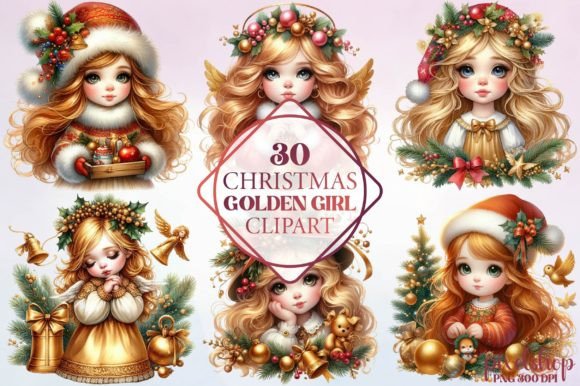
Review: Watercolor Christmas Golden Girl Clipart for Embroidery
As a designer who has spent years translating digital art into thread, I have learned that not every beautiful image makes a good machine embroidery design. When I first pulled up the Watercolor Christmas Golden Girl Clipart, my initial reaction was one of aesthetic appreciation. The soft, bleeding edges of the watercolor style and the warm, golden tones evoke a sense of nostalgic holiday warmth. However, my designer brain immediately switched to practical mode. How will these soft gradients translate to stitch? Will the details hold up on a textured fabric? This review breaks down the real-world viability of this asset for your next embroidery project.
First Impressions: Mood and Visual Personality
The primary strength of this clipart lies in its mood. It is not just a generic holiday icon; it carries a specific artistic weight. The "golden" aspect suggests warmth, luxury, and tradition, while the watercolor technique adds a layer of approachable, handmade charm. For an Etsy seller or a boutique owner, this visual personality is crucial. It signals quality and thoughtfulness.
However, from a technical standpoint, watercolor styles are notoriously difficult to embroider. They rely on subtle shifts in opacity and color blending, which threads cannot naturally replicate without complex digitizing. If this is a raw illustration intended for conversion, you must be prepared for significant digitizing work. If it is already a digitized embroidery file, you need to inspect how the designer handled those transitions. Did they use dense fill stitch patterns to mimic shading, or did they opt for a more abstract, simplified approach? In my experience, the latter often yields a cleaner, more professional finished product.
Real-World Application: The Holiday Tote Bag Test
To truly evaluate this design, I imagined applying it to a common commercial item: a heavy canvas tote bag design for the holiday season. Canvas is forgiving, but it has a distinct weave. I visualized placing the Golden Girl motif on the front panel. The larger scale of a tote allows the watercolor effects to breathe. If the design includes fine, hairline details, they might get lost in the fabric texture. But if the shapes are bold and the color blocks are distinct, the result could be stunning.
I also considered sweatshirt embroidery. Here, the fabric is fuzzy and stretchy. A complex watercolor design with high stitch density can cause puckering or make the garment stiff and uncomfortable. For a sweatshirt, I would recommend simplifying the design, perhaps treating it more like an applique design where large sections of fabric are covered by satin borders rather than dense fills. This reduces bulk and maintains the softness of the garment, which is critical for customer satisfaction.
Fabric and Surface Considerations
Not all surfaces are created equal. When working with Illustrations that feature soft edges, fabric choice dictates success. On smooth, tightly woven cottons or poly-blends, the stitches will lie flat and the colors will appear vibrant. This makes the design ideal for pillow covers, kitchen towels, and aprons. These items are often viewed from a distance, allowing the overall impression of the watercolor style to shine without the viewer scrutinizing individual stitch lines.
Conversely, be cautious with dark fabrics. Watercolor designs often rely on light, pastel, or translucent layers. If you stitch light golds and soft blues onto black fleece, you may face visibility issues unless you use a white underlay or backing. Always test your thread colors against your fabric. A printable mockup can help visualize contrast, but nothing beats a physical test on scrap fabric. Additionally, avoid using this design on highly textured materials like terry cloth or loose knits unless you use a strong cut-away stabilizer to prevent distortion.
Technical Challenges and Designer Notes
Before you commit to production, there are several technical hurdles to address. First, check the hoop size requirements. If the design is large, ensure your machine can accommodate it. If you need to resize it significantly, be aware that shrinking a complex watercolor-style design can cause stitches to merge, creating a muddy, indistinct blob. Expanding it too much can leave gaps between stitches, revealing the fabric underneath.
Pay close attention to the satin stitch widths. In watercolor-inspired designs, long satin stitches are sometimes used to create gradient effects. If these stitches are too long, they will snag easily, especially on items like baby clothes or custom apparel that undergo frequent washing. I recommend adding a tack-down stitch or converting long satins to shorter fill stitches for durability.
Another critical factor is the digital embroidery file format. Ensure you have the correct format for your machine. More importantly, verify the licensing. If you plan to use this for commercial embroidery or sell small shop product items, confirm that the license permits commercial use of the finished goods. Some artists allow personal use only, while others require an extended license for mass production.
Enhancing Brand Value and Customer Trust
Why go through the trouble of selecting a nuanced design like Watercolor Christmas Golden Girl Clipart? Because it elevates your brand. In a market saturated with generic, clip-art style holidays motifs, a sophisticated, artistically driven design stands out. It suggests that you care about aesthetics and quality. This builds customer trust and increases the perceived value of your handmade product.
For personalized gift creators, this design offers a unique canvas. Imagine adding a monogram in a complementary script font below the Golden Girl motif. The combination of the artistic illustration and the personalized text creates a high-end look that appeals to buyers seeking something special for holiday embroidery gifts. It transforms a simple item into a keepsake.
Final Verdict and Practical Advice
The Watercolor Christmas Golden Girl Clipart is a potent asset for designers who understand the limitations and possibilities of embroidery. It is not a "plug-and-play" solution for every scenario. It requires thoughtful selection of fabric, careful attention to stabilizer choice, and potentially some digitizing adjustments to ensure the watercolor effect translates well into thread.
- Test on scraps: Always stitch a sample on your intended fabric before starting the final piece.
- Check density: Ensure the stitch count is appropriate for the fabric weight to avoid puckering.
- Contrast matters: Verify that light thread colors stand out against your chosen background.
- License check: Confirm commercial rights if you are selling the finished product.
- Simplify if needed: Don’t be afraid to reduce detail for better stitch clarity on smaller items like embroidered patches or caps.
In conclusion, this design fits best in projects where artistic flair is valued over rigid precision. It shines on tote bags, pillow covers, and adult apparel where the scale allows the watercolor nuances to be appreciated. For craft business owners looking to differentiate their design assets and offer something beyond the standard holiday fare, this clipart is a worthy consideration. Just remember: the beauty of the final piece depends as much on your technical execution as it does on the original artwork.