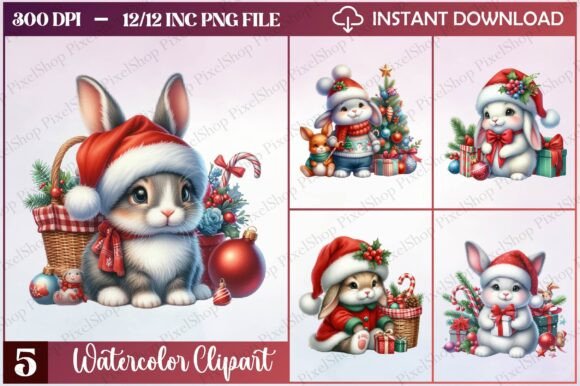
Review: Watercolor Christmas Rabbit Clipart for Embroidery
As a designer who has spent countless hours digitizing and stitching out holiday motifs, I approach every new asset with a mix of excitement and skepticism. The market is flooded with generic holiday graphics, but finding something that translates well from screen to thread is a different challenge entirely. Recently, I evaluated the Watercolor Christmas Rabbit Clipart to determine its viability for real-world embroidery projects. This isn’t just about whether the image looks cute on a tablet; it is about how those soft, blended edges hold up under the needle, how the color palette interacts with various fabrics, and whether it adds genuine value to a handmade product line.
First Impressions and Aesthetic Appeal
The immediate standout feature of this Illustrations piece is its mood. Unlike the sharp, vector-heavy designs that dominate many digital marketplaces, this rabbit carries a gentle, nostalgic warmth. The watercolor effect suggests softness, which aligns perfectly with the tactile nature of embroidery. For a designer, this presents both an opportunity and a technical hurdle. The visual personality is whimsical yet refined, making it suitable for high-end boutique items rather than just quick craft fair giveaways.
When I first loaded the design into my viewing software, I looked closely at the transition areas. Watercolor styles rely on gradients and bleeding colors. In embroidery, we simulate this through blend modes, varied thread colors, and strategic stitch angles. The layout of the rabbit is balanced, with enough negative space to prevent the design from looking cluttered once stitched. It feels organic, avoiding the rigid symmetry that can sometimes make machine embroidery look stiff or mass-produced.
Real-World Application: The Holiday Tote Bag Test
To truly understand the potential of the Watercolor Christmas Rabbit Clipart, I envisioned a specific use case: a custom embroidered tote bag for a local boutique’s holiday gift-with-purchase campaign. Tote bags are typically made from canvas or heavy cotton, which provides a stable base for stitching. The rustic charm of the watercolor style complements the natural texture of these fabrics beautifully.
In this scenario, the design would serve as the central focal point. Because the rabbit is not overly dense, it avoids turning the fabric into a cardboard-like sheet, a common issue with heavy fill stitches. The soft edges of the watercolor style allow for a more artistic interpretation using satin stitch borders and lighter fill densities. Customers reacting to this finished product would likely perceive it as artisanal and thoughtful, increasing the perceived value of the item. It transforms a simple bag into a keepsake, enhancing the brand’s reputation for quality and attention to detail.
Versatility Across Product Lines
Beyond tote bags, this design shows promise in several other categories. For sweatshirt embroidery, the soft aesthetic pairs well with fleece or French terry fabrics. However, one must be cautious with pile fabrics; the details might get lost if the stitch density is too low. For baby embroidery, such as on onesies or burp cloths, the gentle theme is ideal. Parents often seek out non-aggressive, soothing imagery for infants, and this rabbit fits that brief perfectly. Just ensure that the backing stabilizer is soft and cut-away to maintain comfort against sensitive skin.
For Etsy sellers and small shop owners, this asset can be leveraged for seasonal collections. It works well on aprons for holiday baking enthusiasts, pillow covers for nursery decor, and even as part of a larger collage on denim jackets. The key is adapting the scale. A larger hoop size allows the watercolor nuances to breathe, while a smaller hoop might require simplifying the color stops to maintain clarity.
Technical Considerations and Stitching Challenges
While the aesthetic is strong, the technical execution requires careful planning. Watercolor effects are notoriously difficult to replicate in thread because threads are solid colors, not translucent paints. To achieve the desired look, you cannot rely on a single embroidery file without reviewing the color sequence. You will need to use multiple shades of similar hues to create the illusion of blending. This increases the number of thread changes, which impacts production time.
Stitch density is another critical factor. If the digitizer has packed too many stitches into the shaded areas, the design may pucker, especially on lighter fabrics. Conversely, if the density is too low, the fabric grain might show through, breaking the illusion of the watercolor wash. I recommend testing the design on scrap fabric that matches your final product material. Pay close attention to the edges of the rabbit’s ears and any decorative elements like bows or holly. These fine details need precise satin stitching or tight running stitches to remain crisp.
Fabric and Hoop Constraints
Not all fabrics are created equal for this type of design. On dark fabrics, the lighter pastel tones typical of watercolor art may not pop unless you use an underlay of white thread or choose a brighter, more saturated thread palette. Always test your thread colors against the fabric background. For stretchy fabrics like jersey knits, a cut-away stabilizer is non-negotiable to prevent distortion during washing.
Curved surfaces, such as caps or hats, present another challenge. The Watercolor Christmas Rabbit Clipart should be scaled down and possibly simplified for cap embroidery. The curvature can distort wide designs, so keeping the motif compact ensures it remains recognizable. Additionally, avoid placing dense stitch areas near the seam lines of caps, as this can cause needle deflection and uneven stitching.
Enhancing Brand Value and Customer Trust
Using high-quality design assets like this directly influences customer trust. When a buyer sees a clean, well-executed embroidered design, they associate that quality with your brand. Sloppy stitching or poorly chosen designs can detract from the professionalism of your handmade product. This rabbit, when stitched correctly, elevates the presentation. It signals that the creator cares about aesthetics and trend relevance.
For commercial embroidery projects, consistency is key. If you are producing a run of items, ensure that your tension settings are calibrated to handle the varying densities within the design. A consistent look across all units builds reliability. Furthermore, using this design in your printable mockup previews can help online shoppers visualize the final result, potentially increasing conversion rates. High-quality visuals in your listings reflect the quality of the physical item.
Practical Designer Notes for Best Results
Before committing to a large production run or listing this as a new product, follow these practical steps:
- Test on Scrap Fabric: Always stitch out a sample on the exact fabric you intend to use. Check for puckering, thread breaks, and color accuracy.
- Check Stabilizer Compatibility: Use the right stabilizer for your fabric type. Tear-away for stable wovens, cut-away for knits, and wash-away for delicate or sheer materials.
- Review Color Contrast: Ensure the thread colors provide enough contrast against the fabric. Adjust the palette if necessary to maintain visibility.
- Inspect Small Details: Zoom in on the digitized file to check for redundant stitches or overly long jumps that could cause tangling.
- Verify Licensing: Before selling finished items or using the design in commercial products, confirm the license terms provided with the digital embroidery file. Ensure you have the right to use it for commercial purposes.
- Mockup Testing: Create black and white mockups to check the silhouette and readability of the design without the distraction of color.
In conclusion, the Watercolor Christmas Rabbit Clipart is a versatile and charming addition to a designer’s toolkit. It bridges the gap between digital art and tactile craft, offering a fresh take on holiday themes. By paying attention to technical details like stitch density, fabric choice, and color blending, you can transform this digital asset into a stunning physical product. Whether you are an Etsy seller looking to refresh your holiday inventory or a hobbyist creating personalized gifts, this design offers the creative flexibility needed to produce memorable, high-quality embroidery work.