Reviewing Merry Christmas Coquette Sublimation for Embroidery
As a designer who spends half my life staring at digitized files and the other half watching needles punch through fabric, I have learned that not every pretty graphic translates well to thread. When I first pulled up the Merry Christmas Coquette Sublimation file, my initial reaction was one of cautious optimism. The aesthetic is undeniably trending—soft bows, festive typography, and that distinct "coquette" charm that has taken over social media feeds. But does it hold up under the needle? For embroidery designers, Etsy sellers, and handmade shop owners, the gap between a digital illustration and a stitched reality is where profits are either made or lost.
The Visual Personality and First Impressions
The mood of this design is playful yet refined. It captures the whimsical spirit of the holiday season without relying on the traditional, heavy-handed red and green clichés. From a layout perspective, the balance between the text and the decorative elements feels intentional. For those of us working in Illustrations and digital assets, we know that negative space is just as important as the subject matter. This design breathes. It doesn’t feel cluttered, which is a massive advantage when you are trying to maintain stitching clarity on textured fabrics.
However, because this is labeled as a sublimation design, my immediate concern was detail retention. Sublimation prints can handle gradients and tiny lines that embroidery machines simply cannot replicate. If you are planning to use this as a direct machine embroidery design, you need to assess whether the finer lines of the bows and the serifs in the lettering will turn into a messy blob of thread. In my experience, designs with this level of intricacy require careful digitizing. If you are buying this as a ready-to-stitch embroidery file, check the stitch types. You want to see a mix of satin stitch for the borders and clean fill stitch work for the larger areas, rather than dense block coloring that adds unnecessary bulk.
Real-World Application: The Holiday Tote Bag Test
To truly evaluate Merry Christmas Coquette Sublimation, I imagined it applied to a canvas tote bag design. This is a staple product for any craft business during Q4. Canvas has a visible weave, which can swallow up thin lines. If the design relies too heavily on running stitch outlines without proper underlay, the fabric might peek through, ruining the crispness of the coquette aesthetic.
In this scenario, the design shines if the digitizer has accounted for stitch density. A lower density allows the texture of the canvas to complement the embroidery rather than fight against it. For a personalized gift like this, the visual appeal hinges on professionalism. A sloppy stitch-out suggests a hobbyist mistake; a clean, well-balanced design suggests a boutique product. If you are an Etsy seller, this distinction determines whether a customer leaves a five-star review or asks for a refund. The coquette style, with its feminine and delicate cues, pairs beautifully with natural fiber totes, creating a finished product that feels high-end and thoughtful.
Apparel and Curved Surfaces: Proceed with Caution
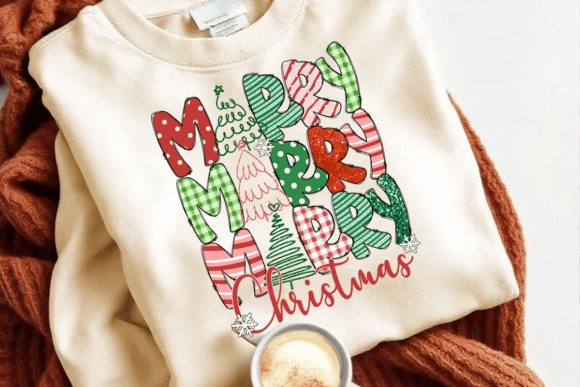
While the design looks promising on flat surfaces, applying it to custom apparel like sweatshirts or caps requires a different strategy. Let’s talk about sweatshirt embroidery. Fleece and French terry are thick and plush. If the Merry Christmas Coquette Sublimation design has large solid areas, it can create a stiff patch that pulls on the fabric, causing puckering. This is where checking the stabilizer choice becomes critical. A cut-away stabilizer is non-negotiable here to support the weight of the threads.
Furthermore, consider the hoop size. If you are stitching this on a child’s item or a baby embroidery project, you might be working with a 4x4 or 5x7 hoop. You must ensure the design scales down without losing legibility. Tiny details in the bow ribbons or small text elements can easily merge together when reduced. I always recommend running a test on scrap fabric of the same weight before committing to the final garment. This is especially true for textured fabrics or stretchy fabric where the needle penetration can distort the image.
For curved surfaces like caps, the challenge is even greater. The center front panel of a cap is narrow. If the design is wide, it will wrap around the curve and distort. You need to verify the aspect ratio. If the design is too wide, it may need to be resized or re-digitized specifically for headwear. An embroidered patch might be a smarter alternative for caps, allowing you to stitch the design on flat twill and then apply it, ensuring the coquette details remain sharp and undistorted.
Commercial Viability and Brand Consistency
For commercial embroidery projects, consistency is key. If you are building a brand around holiday decor, this design fits well within the current market trend. However, you must consider thread colors. The coquette aesthetic often relies on soft pastels, creams, and muted reds. Ensure your thread chart matches the intended vibe. High-contrast neon threads would clash with the gentle nature of the design.
From a business standpoint, using a design like Merry Christmas Coquette Sublimation can enhance buyer engagement. It feels fresh and modern, appealing to a younger demographic that values aesthetics. But remember, the perceived value of your small shop product depends on execution. If the stitching is dense and heavy, it feels cheap. If it is light, airy, and precise, it feels luxurious. Always check the license terms. Just because a file is available for purchase does not mean it is cleared for commercial use. Confirm whether you can sell the digital embroidery file itself or only the handmade product.
Practical Designer Notes for Best Results
Before you load this design into your machine, take these practical steps to ensure success:
- Test on Scrap Fabric: Never skip this step. Use the exact fabric type you plan to sell to check for puckering or thread breaks.
- Check Contrast: View the design in black and white. If the details disappear, the contrast is too low for certain fabrics, and you may need to adjust thread choices.
- Inspect Small Details: Zoom in on the digitized file. Are there excessive jump stitches? Are the tiny bow loops actually stitchable, or are they just single lines that will unravel?
- Confirm Hoop Size: Ensure the design fits your available hoops without needing to resize it to a point where quality suffers.
- Review Stitch Density: If the design feels heavy, ask the digitizer if a lighter version is available, especially for lightweight garments.
- Licensing Check: Clearly understand if this is for personal use only or if you can use it in your crafter business inventory.
In conclusion, Merry Christmas Coquette Sublimation offers a stylish, contemporary look that can elevate your holiday collection. However, its success depends entirely on how well it is adapted for embroidery. By paying attention to fabric texture, stabilizer support, and stitch density, you can transform a simple digital asset into a standout holiday embroidery piece that customers will love. Whether you are creating a kitchen towel, a pillow cover, or a boutique sweatshirt, let the quality of your stitching speak as loudly as the design itself.