Reviewing Watercolor Christmas Funny Bison Clipart
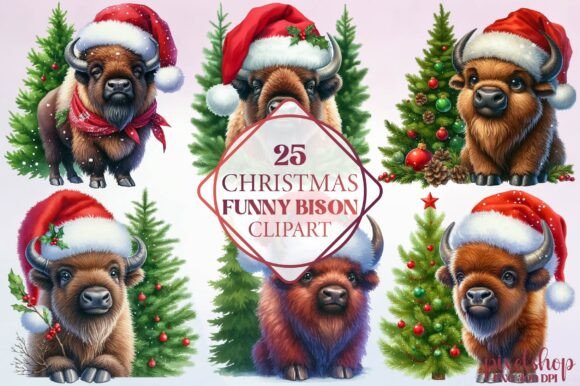
As a designer who spends more time staring at stitch simulations than actual sunlight, I have learned that not every cute graphic translates well to thread. We have all been there: you find an adorable illustration, imagine it perfectly centered on a holiday sweatshirt, and then watch in horror as the machine turns fine details into a tangled mess of bobbin thread. This is why I approach new assets with a critical eye. Recently, I spent some time evaluating the Watercolor Christmas Funny Bison Clipart to see if it holds up under the needle or if it is better left for digital-only projects.
The first impression of this piece is undeniably charming. It captures that specific whimsical energy that sells incredibly well during the fourth quarter. The bison is not just a generic animal; it has personality. The watercolor aesthetic suggests softness and warmth, which is exactly what customers look for in holiday embroidery. However, "watercolor" is a tricky style to replicate with thread. Unlike vector art with hard edges, watercolor relies on gradients and bleeds. When converting this into a machine embroidery design, the challenge lies in maintaining that artistic flow without creating excessive stitch counts or losing definition.
Real-World Application: The Holiday Tote Test
To truly understand the value of this asset, I mentally placed it into a real production scenario. Imagine you are an Etsy seller preparing for the rush. You want to create a line of canvas tote bag designs that feel boutique rather than mass-produced. The Watercolor Christmas Funny Bison Clipart sits right in the sweet spot for this. It is festive without being cliché. It appeals to the modern crafter who wants something slightly offbeat but still traditionally seasonal.
In this context, the design works beautifully as a central focal point. On a natural cotton canvas, the organic feel of the bison complements the texture of the fabric. If you were to digitize this for a finished product, you would likely lean into fill stitches to mimic the painted look. The key here is variation. A flat fill would look stiff, but varying the angle and density of the stitches can recreate the fluidity of watercolor paint. For a small shop owner, this means the final item feels high-value and artisanal, justifying a higher price point than a standard clipart application.
Navigating Fabric and Stitch Challenges
While the aesthetic is strong, we must discuss the technical realities. Watercolor styles often contain subtle color shifts. In embroidery, every color change adds time and complexity. If you are using this as an applique design, you might simplify the process by using fabric layers to create the color blocks, reducing stitch density and preventing the garment from becoming board-like. This is crucial for items like baby embroidery projects, where comfort is paramount. A dense satin stitch border around a heavy fill can be scratchy against sensitive skin.
You must also consider the hoop size. If you attempt to shrink this design too much for a pocket logo or a small embroidered patch, the details will vanish. The funny expression of the bison relies on specific facial features. If those merge into a blob of thread, the humor is lost. I recommend testing the design on scrap fabric at your intended size before committing to a final piece. Check how the thread colors blend. Sometimes, what looks like a smooth gradient on screen becomes distinct, harsh lines when stitched. Using variegated thread can help bridge these gaps, adding depth and maintaining the watercolor illusion.
Another consideration is the fabric texture. This design shines on stable, medium-weight fabrics like twill, denim, or heavy cotton. On stretchy knits, such as those used for sweatshirt embroidery, you must use a robust stabilizer. Without proper support, the puckering will distort the bison’s shape, turning a funny character into a confusing abstract shape. For curved surfaces like caps, the design needs to be simplified further. The intricate edges of the watercolor style may not hold up well on the tight curve of a baseball cap front panel unless the digitizing is exceptionally skilled.
Commercial Viability and Brand Consistency
For commercial embroidery professionals, consistency is king. When you sell a personalized gift, the customer expects perfection. The Watercolor Christmas Funny Bison Clipart offers a unique selling proposition because it stands out from the typical rigid, cartoonish holiday graphics. It feels hand-painted, which builds trust and perceived quality. However, you must ensure that your digitizing matches this quality. A poorly digitized version of a high-quality illustration reflects poorly on your brand.
If you are a digital embroidery file seller, your mockups need to tell the truth. Use printable mockup tools that show realistic thread sheen and texture. Do not just paste the flat image onto a shirt photo. Show the stitch direction. Show how the running stitch outlines define the shape. This transparency helps buyers understand what they are purchasing and reduces refund requests. It also helps craft business owners visualize how the design will look on their specific inventory, whether it is kitchen towels or pillow covers.
Practical Designer Notes for Success
Before you load this into your machine, take a moment to review the technical specs. Since specific file formats and stitch counts are not provided here, you must check them with the source. Ensure the format is compatible with your machine. Here is a checklist for integrating this Illustrations asset into your workflow:
- Test on Scrap: Always stitch out a test sample on the same fabric type you intend to use for the final product.
- Check Contrast: Verify that the thread colors provide enough contrast against your fabric choice. Dark threads on dark fabric will hide the detail.
- Review Density: High stitch density can cause puckering. Adjust pull compensation if necessary.
- Inspect Details: Zoom in on the digitized file. Are the eyes and nose clear? Do the hooves look defined?
- Licensing Confirmation: Before selling any small shop product featuring this bison, confirm the license terms. Ensure you have commercial rights for physical goods.
- Mockup Variations: Create black and white versions to check for clarity. If it looks good in monochrome, it will look good in color.
The Watercolor Christmas Funny Bison Clipart is a strong contender for your holiday lineup. It bridges the gap between traditional holiday motifs and modern, whimsical design trends. By respecting the limitations of the medium and paying attention to stitch technique, you can transform this digital asset into a tangible, high-quality handmade product. Whether you are decorating custom apparel or creating unique design assets for your store, this bison brings a smile that is worth stitching.